

Choosing an Automotive Lift for Pickup Trucks, SUVs, and Work Vans
Servicing larger vehicles requires more than selecting an automotive lift with a higher rated capacity. Vehicle dimensions, weight distribution, frame design, lifting-point locations, installed equipment, and service bay requirements all influence which lifting configuration is appropriate for your repair facility.
What Is the Best Automotive Lift for Trucks, SUVs, and Work Vans?
The best automotive lift for pickup trucks, SUVs, and work vans is one that accommodates the vehicle's actual operating weight, weight distribution, dimensions, designated lifting points, and intended repair application.
Appropriately rated two-post lifts can provide wheel-free access for mechanical repairs, while compatible four-post lifts can support inspections, alignment, and wheel-supported maintenance. Specialized heavy-duty lifting equipment may be necessary for larger commercial vehicles.
Shop owners should evaluate the exact vehicle configurations they service rather than choosing equipment based exclusively on advertised lifting capacity.
- ✅ Verify actual vehicle weight and loading conditions
- ✅ Evaluate front-to-rear weight distribution
- ✅ Confirm arm reach and lifting-point accessibility
- ✅ Account for vehicle height, width, and wheelbase
- ✅ Consider service bodies and permanently installed equipment
- ✅ Verify facility and manufacturer requirements
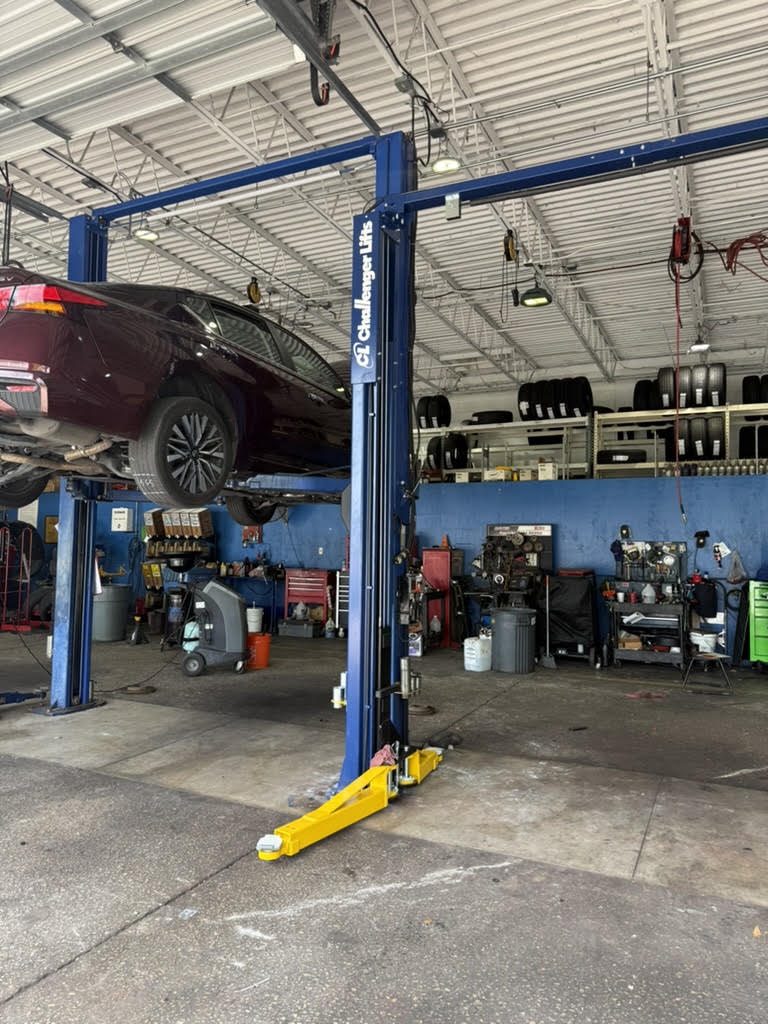
Why Trucks and Commercial Vans Require Different Lift Considerations
Pickup trucks, SUVs, and commercial vans can differ substantially from ordinary passenger vehicles. Their weight, dimensions, frame configurations, and installed equipment can introduce additional lifting and service bay requirements.
Vehicle Weight
Larger engines, heavy-duty drivetrains, service bodies, commercial equipment, and cargo can increase the actual weight of a vehicle beyond its basic factory configuration.
Vehicle Geometry
Longer wheelbases, wider bodies, increased ground clearance, and different frame designs can affect lifting-arm reach, runway compatibility, and technician access.
Weight Distribution
Commercial equipment, engine placement, cargo, and vehicle body configurations can create uneven loading that must be considered alongside the lift's total rated capacity.
Different Vehicle Categories Create Different Lifting Requirements
A repair shop servicing standard pickup trucks may have different equipment needs than a facility maintaining commercial vans, utility vehicles, or heavily equipped fleet trucks.
Light-Duty Pickup Trucks
Standard pickup trucks may be compatible with appropriately rated automotive lifts when arm reach, lifting points, weight distribution, and vehicle dimensions satisfy equipment requirements.
Heavy-Duty Pickup Trucks
Larger pickup configurations can introduce increased vehicle weight, longer wheelbases, greater ground clearance, and additional loading considerations.
Sport Utility Vehicles
SUVs vary considerably in size, weight, frame construction, underbody layout, and lifting-point location. Compatibility should be evaluated for the specific vehicle.
Commercial Work Vans
Work vans may contain shelving, tools, materials, mounted equipment, and other modifications that influence their actual weight and loading characteristics.
Utility and Service Trucks
Service bodies, compressors, generators, tool compartments, and permanently mounted equipment may substantially change vehicle weight and its distribution.
Electric Trucks and SUVs
Battery weight, battery enclosure locations, underbody configurations, and manufacturer-specific lifting procedures can introduce additional compatibility considerations.
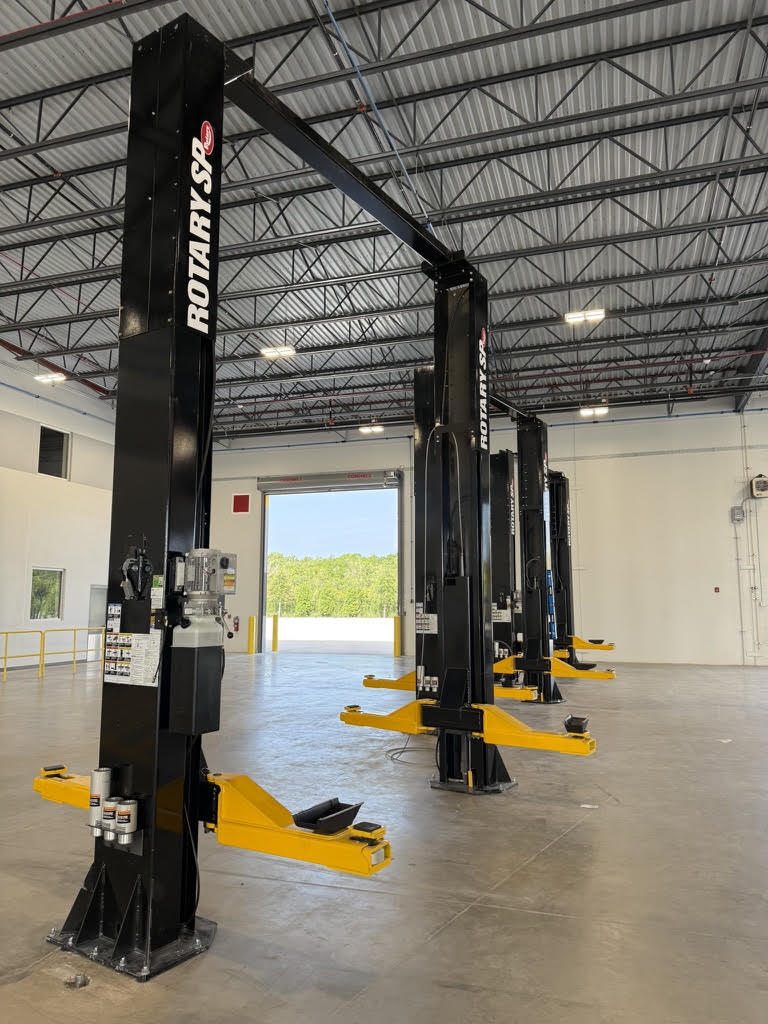
Do Not Select a Truck Lift Using Factory Curb Weight Alone
Published curb weight can provide a starting point when researching a vehicle, but it may not represent the actual weight of a truck or work van entering a commercial repair facility.
Vehicles used by contractors, utility companies, mobile service businesses, and commercial fleets may carry additional equipment that significantly changes their operating weight.
Factors that can increase vehicle weight include:
- Aftermarket service bodies and utility beds
- Commercial shelving and storage systems
- Tools, replacement parts, and work materials
- Mounted generators and air compressors
- Additional fuel tanks and auxiliary equipment
- Heavy-duty bumpers and aftermarket accessories
When the actual weight or loading characteristics are uncertain, obtain reliable vehicle weight information before determining whether the vehicle is appropriate for a particular lift.
Curb Weight, GVWR, and Actual Vehicle Weight Are Not the Same
Understanding common vehicle weight terminology can help shop owners make better equipment purchasing decisions.
Curb Weight
Curb weight generally describes a vehicle with its standard equipment and necessary operating fluids, without passengers or additional cargo. Definitions can vary by manufacturer.
Gross Vehicle Weight Rating (GVWR)
GVWR represents the maximum loaded vehicle weight specified by the vehicle manufacturer. It is a vehicle rating rather than a measurement of what the vehicle currently weighs.
Actual Vehicle Weight
Actual vehicle weight reflects the vehicle and its current equipment, fluids, modifications, and load. This weight can differ substantially from the original factory curb weight.
Gross Axle Weight Rating (GAWR)
GAWR identifies the manufacturer's maximum permitted load for a particular axle. Actual axle weights and applicable lift loading requirements can provide additional information when evaluating vehicle compatibility.
Total Vehicle Weight Is Only One Part of Lift Compatibility
Two vehicles with similar total weights can place different loads on a lifting system. The location of heavy components and installed equipment influences how weight is distributed throughout the vehicle.
Front-Heavy Vehicles
Large engines, heavy-duty front components, and front-mounted accessories may increase the proportion of vehicle weight carried toward the front.
Rear-Heavy Vehicles
Utility beds, mounted machinery, cargo, and commercial storage systems may increase rearward loading.
Uneven Side-to-Side Loading
Tools, shelving, auxiliary equipment, and vehicle modifications can create different loading conditions between the left and right sides of a vehicle.
Changing Weight Distribution
Removing major components during repairs can change vehicle balance. The intended repair procedure should be evaluated according to vehicle and lift manufacturer requirements.
When Is a Two-Post Automotive Lift Appropriate for Trucks and SUVs?
An appropriately rated two-post lift can be a practical choice for repair facilities performing brake work, suspension repairs, steering service, drivetrain repairs, and other applications requiring wheel-free access.
For larger vehicles, however, the lifting arms must be capable of reaching the designated lifting points while satisfying the equipment's positioning and loading requirements.
Ground clearance, running boards, frame geometry, wheelbase, vehicle width, and weight distribution should all be evaluated before selecting a two-post configuration.
Compatible truck adapters and extensions may be necessary for certain vehicles, but they must be appropriate for the specific lift and intended application.
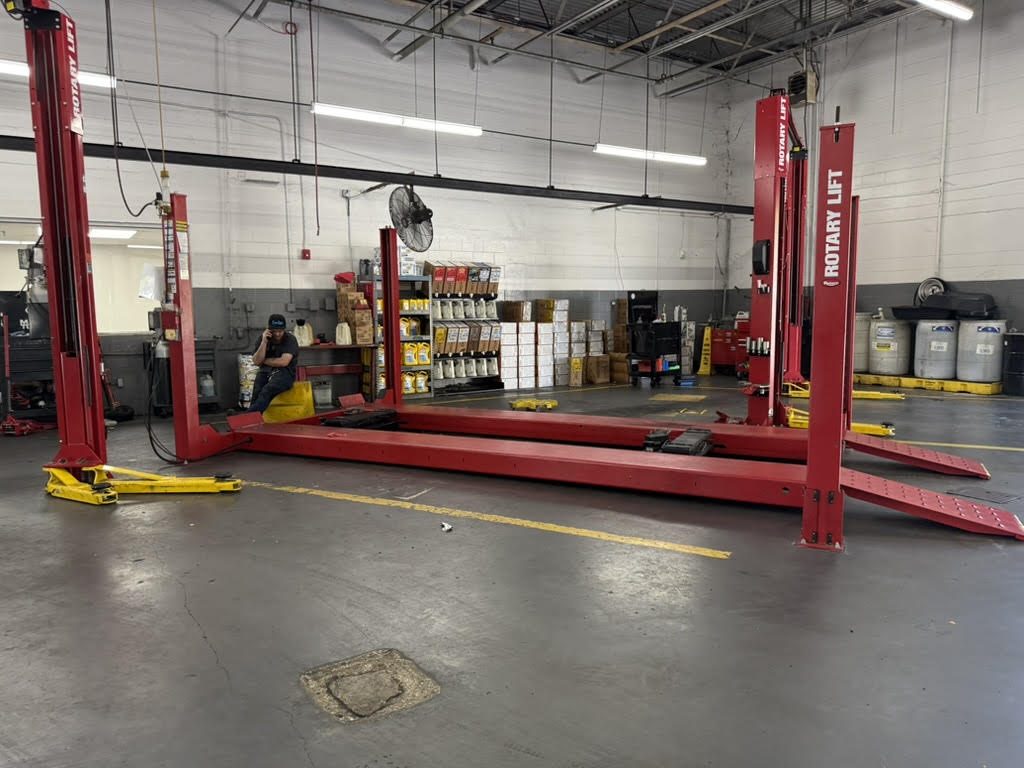
When Is a Four-Post Automotive Lift Appropriate for Larger Vehicles?
Conventional four-post lifts support vehicles through their wheels on elevated runways. Appropriately rated models may be useful for servicing compatible trucks, SUVs, and commercial vans when wheel-supported access suits the intended repair application.
Preventive Fleet Maintenance
Wheel-supported access can be useful for many routine underbody inspections, fluid services, and preventive maintenance procedures.
Longer-Wheelbase Vehicles
Certain four-post configurations may accommodate longer vehicles when runway length, width, wheelbase limitations, and loading requirements are appropriate.
Commercial Vehicle Inspections
Elevated runways can provide access beneath compatible vehicles for visual assessments and inspection-related service procedures.
Wheel Alignment Services
Four-post lifts specifically designed and equipped for alignment applications may support compatible truck, SUV, and van alignment services.
For a more detailed comparison, read our guide to two-post versus four-post automotive lifts and how each configuration affects repair shop operations.
When Does a Repair Facility Need Specialized Heavy-Duty Lifts?
Conventional automotive lifts are not appropriate for every commercial vehicle. Larger trucks, heavily equipped service vehicles, and specialized fleet units may require lifting equipment designed for different capacity, dimensional, and loading requirements.
Higher Vehicle Weights
Some commercial vehicles may exceed the rated capacity or applicable loading limits of conventional automotive lifting equipment.
Specialized Vehicle Dimensions
Extended wheelbases, dual rear wheels, wide service bodies, and tall commercial vehicle configurations may require different lifting equipment and facility layouts.
Different Maintenance Applications
Facilities servicing medium-duty or heavy-duty commercial vehicles may need specialized lifting configurations selected around the vehicle type and maintenance procedures.
Explore our truck and heavy-duty lifting equipment to discuss the requirements of your commercial repair or fleet maintenance facility.
Why Arm Reach Matters When Lifting Pickup Trucks and SUVs
The ability of a two-post lift to accommodate a vehicle depends partly on whether its arms can reach the designated lifting locations within the equipment's permitted configuration.
Extended Wheelbases
Crew-cab pickups, long-bed trucks, and extended commercial vans may have lifting points that require different arm reach than shorter passenger vehicles.
Frame and Underbody Design
Frame construction, battery enclosures, body components, and underbody equipment can affect access to designated lifting locations.
Vehicle Positioning
The vehicle must be positioned according to applicable manufacturer instructions while maintaining appropriate arm geometry and loading conditions.
Larger Vehicles May Require Different Lift Accessories
Pickup trucks and SUVs often have greater ground clearance than passenger cars. Depending on their design, compatible adapters or extensions may be needed to reach the manufacturer's designated lifting points.
The accessory must be appropriate for the exact lift model, vehicle configuration, and intended lifting application.
- Evaluate vehicle ground clearance
- Identify designated lifting-point locations
- Account for running boards and side steps
- Confirm adapter compatibility with the lift
- Verify applicable accessory loading limits
- Avoid improvised spacers or modified adapters
Learn more about how automotive lift parts and accessories affect vehicle compatibility before selecting equipment for a mixed-vehicle repair facility.
Special Considerations When Choosing Automotive Lifts for Work Vans
Commercial vans are frequently modified to support plumbing, electrical, HVAC, construction, delivery, and mobile service operations. These modifications can affect how the vehicle interacts with automotive lifting equipment.
High-Roof Configurations
Tall commercial vans require careful consideration of overhead clearance, lift structures, building components, and maximum usable lifting height.
Extended Wheelbases
Extended-length vans may introduce different arm reach, runway length, vehicle approach, and service bay requirements.
Interior Storage Systems
Shelving, tool cabinets, equipment racks, and stored materials can increase vehicle weight and influence side-to-side or front-to-rear loading.
Permanently Installed Equipment
Auxiliary batteries, generators, tanks, compressors, and other mounted equipment should be considered when evaluating actual vehicle weight and compatibility.
A Modified Work Truck Is Not Necessarily Equivalent to a Standard Pickup
Two trucks built on similar chassis may have substantially different lifting requirements after one receives a commercial service body or other permanently installed equipment.
Utility compartments, tool storage, auxiliary machinery, additional tanks, and mounted accessories can change the vehicle's actual weight and center of gravity.
Service Body Width
Wider bodies and external compartments may affect column clearance, technician access, and vehicle positioning.
Additional Rear Weight
Equipment installed behind the cab may substantially influence rear axle loading and the overall weight distribution.
Restricted Lifting-Point Access
Aftermarket components may interfere with access to designated lifting points or require different compatible lifting equipment.
How Electric Vehicle Designs Can Affect Automotive Lift Selection
Electric trucks and SUVs can introduce different lifting considerations because of battery weight, underbody construction, and manufacturer-specific service procedures.
Battery Weight
Large battery assemblies can contribute substantially to vehicle weight and influence the capacity requirements of compatible lifting equipment.
Underbody Clearance
Battery enclosures and other underbody components can affect access to designated lifting points and the suitability of particular contact accessories.
Vehicle-Specific Procedures
Electric vehicle lifting and service procedures should follow the vehicle manufacturer's requirements and applicable equipment instructions.
Can Your Repair Shop Accommodate a Lift for Larger Vehicles?
Selecting automotive lifts for trucks and commercial vans requires evaluating the building as well as the lifting equipment. Larger vehicles may need additional working space, overhead clearance, and suitable installation conditions.
Ceiling Height
Evaluate the combined height of the vehicle and lifting equipment while accounting for overhead doors, lighting, ventilation, and building structures.
Service Bay Width
Wider trucks, extended mirrors, service bodies, and open vehicle doors may require additional working clearance.
Service Bay Length
Long-bed pickups, crew-cab trucks, and extended commercial vans may require greater bay length and vehicle approach clearance.
Concrete and Foundation
The foundation must satisfy the exact lift manufacturer's requirements for concrete strength, thickness, condition, anchoring, and installation configuration.
Electrical and Utility Requirements
Electrical supply and any additional utility requirements should be evaluated according to the selected equipment and applicable installation requirements.
Technician Working Space
Allow appropriate clearance for technicians, toolboxes, diagnostic equipment, parts handling, and other activities associated with servicing larger vehicles.
Confirm Installation Requirements Before Purchasing a Heavy-Duty Lift
A higher-capacity automotive lift may have different installation requirements from equipment already operating inside your repair facility.
Existing concrete, available overhead clearance, electrical supply, and service bay dimensions should not automatically be assumed suitable for replacement or upgraded equipment.
Evaluate the exact proposed lift model and its manufacturer installation documentation before purchasing equipment or modifying the facility.
Stickney Equipment provides automotive lift equipment and installation services for qualifying facilities throughout Greater Lakeland, Tampa Bay, and surrounding Central Florida communities.
Choose Fleet Maintenance Lifts Around the Vehicles Your Business Operates
Fleet maintenance facilities often service vehicles with recurring configurations, predictable maintenance requirements, and different operating schedules from general automotive repair shops.
A fleet containing standard pickup trucks, commercial vans, utility vehicles, and specialized service units may require more than one lifting configuration.
Review the fleet's actual vehicle weights, dimensions, equipment modifications, and common maintenance procedures before selecting lifting equipment.
Matching equipment to recurring fleet requirements can help reduce unnecessary vehicle transfers between service bays and improve equipment utilization.
Can One Automotive Lift Handle Both Passenger Cars and Heavy Pickup Trucks?
Some automotive lift models are designed to accommodate a broad range of compatible passenger cars, SUVs, and pickup trucks. However, a higher rated capacity does not automatically establish compatibility with every smaller vehicle.
A lift selected primarily for large trucks may have arm geometry, contact accessories, runway dimensions, or other characteristics that affect its suitability for compact cars and low-clearance vehicles.
General repair shops should evaluate both ends of their vehicle range rather than selecting equipment exclusively around the largest vehicle they expect to service.
Depending on the facility's workload, a combination of different automotive lift configurations may provide a more practical solution than attempting to accommodate every vehicle on one lift.
Build a Vehicle Compatibility Profile Before Choosing Your Lift
Instead of starting with a particular lift capacity, document the vehicles your facility services most frequently. This information provides a more useful basis for evaluating equipment options.
Identify Common Vehicle Models
Record the makes, models, chassis configurations, and vehicle categories that regularly enter your repair facility.
Identify the Heaviest Applications
Determine the actual weight and relevant loading characteristics of larger vehicles, including those with commercial modifications.
Identify the Longest and Tallest Vehicles
Consider extended wheelbases, high-roof vans, long-bed trucks, and other vehicles that may influence equipment dimensions and facility clearance.
Identify Recurring Repair Services
Determine whether the facility primarily performs mechanical repairs, inspections, alignment, preventive maintenance, or specialized commercial vehicle service.
Automotive Lifts Used for Larger Vehicles Require Appropriate Ongoing Care
Lifting equipment used in truck repair, commercial vehicle service, and fleet maintenance facilities should be maintained according to the equipment manufacturer's instructions and applicable requirements.
Contact pads, adapters, lifting arms, restraints, hydraulic components, runways, locking systems, and other applicable components should receive appropriate attention throughout the equipment's service life.
Equipment concerns such as visible damage, abnormal operation, malfunctioning safety systems, or excessive wear should be addressed before the lift returns to service.
Stickney Equipment LLC is listed in the Automotive Lift Institute inspector directory and provides automotive lift inspections, maintenance, and repair services for qualifying Central Florida facilities.
Six Things to Verify Before Buying an Automotive Lift for Larger Vehicles
Actual Vehicle Weight
Verify the weight of the vehicles in their intended service configuration, including installed equipment and applicable loading conditions.
Weight Distribution
Evaluate applicable front-to-rear, side-to-side, axle, and individual lifting component loading requirements.
Vehicle Dimensions
Confirm vehicle height, width, wheelbase, ground clearance, and compatibility with the proposed lift configuration.
Lifting Points and Accessories
Verify designated lifting locations and the suitability of lifting arms, pads, adapters, extensions, or other applicable equipment.
Installation Environment
Confirm foundation requirements, anchoring specifications, electrical supply, overhead clearance, and available service bay dimensions.
Intended Repair Applications
Choose equipment that supports the actual maintenance, mechanical repair, inspection, or specialized services performed by your technicians.
Automotive Lifts for Trucks, SUVs, and Commercial Vans in Central Florida
Stickney Equipment is based in Dover, Florida, and provides automotive lift equipment, heavy-duty lifting solutions, installation, maintenance, inspections, repair, parts, accessories, and related services for qualifying facilities throughout Greater Lakeland, Tampa Bay, and surrounding Central Florida communities.
Independent repair shops, commercial vehicle service facilities, and fleet maintenance operations can contact Stickney Equipment to discuss their vehicle compatibility, lifting equipment, and installation requirements.
Automotive Lifts for Trucks, SUVs, and Work Vans FAQs
What capacity automotive lift do I need for a pickup truck?
The required lift capacity depends on the truck's actual weight, weight distribution, dimensions, lifting-point locations, and applicable equipment loading requirements. There is no single capacity rating that establishes compatibility with every pickup truck.
Can a 10,000-pound automotive lift handle a heavy-duty pickup truck?
It depends on the exact truck and lift model. A vehicle weighing less than 10,000 pounds is not automatically compatible with a lift rated for that capacity. Weight distribution, individual component loading limits, arm reach, lifting points, and manufacturer requirements must also be satisfied.
Is a two-post or four-post lift better for trucks?
An appropriately rated two-post lift can be useful for mechanical repairs requiring wheel-free access. A compatible four-post lift can be useful for inspections, wheel-supported maintenance, and alignment when properly equipped. The better choice depends on the vehicle and intended service application.
Can automotive lifts accommodate high-roof commercial vans?
Certain automotive lifts may accommodate compatible high-roof vans. The lift's dimensions, vehicle weight, overhead clearance, building configuration, lifting-point accessibility, and manufacturer requirements must be evaluated before selecting equipment.
Do pickup trucks require special automotive lift adapters?
Some pickup trucks may require compatible adapters or extensions because of their ground clearance, frame geometry, and designated lifting-point locations. Accessories must be appropriate for the exact lift and intended vehicle application.
Can the same lift be used for passenger cars and commercial trucks?
Some lift models can accommodate a broad range of compatible vehicles. However, total capacity, arm reach, contact height, runway dimensions, vehicle geometry, and manufacturer restrictions must be evaluated for both smaller and larger vehicle applications.
Why is weight distribution important when lifting work trucks?
Work trucks may carry service bodies, tools, machinery, storage systems, and permanently installed equipment that create uneven loading. A lift's total rated capacity does not establish whether every individual lifting component can accommodate those loads.
Are electric trucks and SUVs compatible with conventional automotive lifts?
Some electric trucks and SUVs may be compatible with conventional automotive lifts. Actual vehicle weight, battery enclosure location, designated lifting points, appropriate accessories, and vehicle-specific manufacturer requirements must be evaluated.
Do heavy-duty automotive lifts require different concrete foundations?
They can. Foundation requirements vary by lift manufacturer, model, capacity, and installation configuration. Existing concrete should be evaluated against the exact manufacturer's requirements before equipment is purchased or installed.
Does Stickney Equipment provide truck and heavy-duty lifts in Central Florida?
Stickney Equipment provides automotive lift equipment, truck and heavy-duty lifting solutions, installation, maintenance, inspections, repair, parts, accessories, and related services for qualifying facilities throughout Greater Lakeland, Tampa Bay, and surrounding Central Florida communities.
Choose Lifting Equipment That Matches the Vehicles Your Shop Services
Contact Stickney Equipment to discuss automotive lifts for pickup trucks, SUVs, commercial vans, fleet vehicles, and heavy-duty applications. Evaluate equipment compatibility, installation, maintenance, inspections, repair, and accessory requirements for your Central Florida facility.