

Buying a Used Automotive Lift: What Shop Owners Should Evaluate First
A used automotive lift may appear to offer significant savings, but its purchase price tells only part of the story. Equipment condition, service history, replacement parts, vehicle compatibility, installation requirements, and safety systems should all be evaluated before committing to secondhand lifting equipment.
What Should You Check Before Buying a Used Automotive Lift?
Before buying a used automotive lift, verify its manufacturer, model, serial number, rated capacity, structural condition, safety systems, maintenance history, and availability of compatible replacement parts.
The equipment should also be evaluated against the vehicles your shop services and the installation requirements of your facility. A lift that operated successfully at another location is not automatically suitable for a different repair shop.
A qualified evaluation before purchase, followed by appropriate installation and inspection before use, can help identify problems that may not be apparent from photographs or a seller's description.
- ✅ Verify manufacturer, model, and serial number
- ✅ Review maintenance and inspection records
- ✅ Evaluate structural and mechanical condition
- ✅ Confirm replacement parts are available
- ✅ Verify vehicle and facility compatibility
- ✅ Calculate the complete installed cost
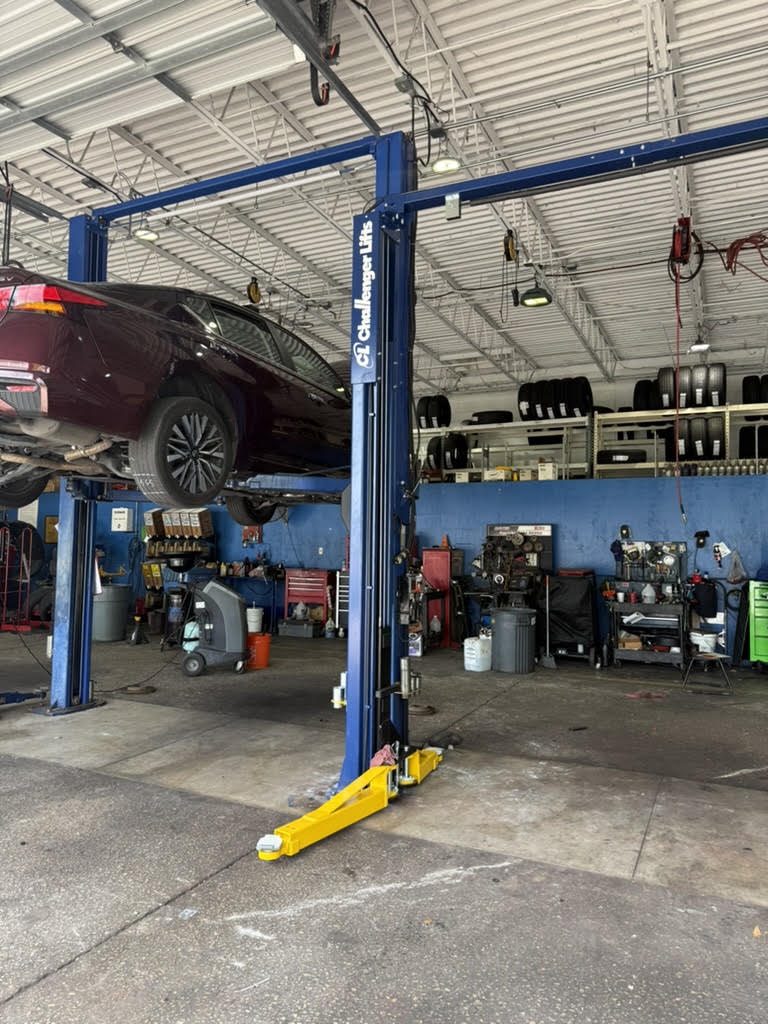
A Low Purchase Price Does Not Always Mean a Good Equipment Investment
Used automotive lifts can be attractive to independent repair shops, expanding service facilities, and business owners working within an equipment budget. However, the value of secondhand equipment depends on more than its advertised selling price.
Equipment Condition
Structural wear, hydraulic problems, damaged components, and malfunctioning safety systems can create additional expenses before the lift can return to normal service.
Installation Expenses
Removal, transportation, replacement installation hardware, facility preparation, and professional installation may substantially increase the total investment.
Long-Term Reliability
Equipment age, previous use, maintenance history, and parts availability can influence future repair expenses and service bay downtime.
Identify the Exact Automotive Lift Before Evaluating Its Value
A seller's description of a lift as a commercial two-post or four-post model is not enough to establish its specifications, installation requirements, or replacement component compatibility.
Manufacturer and Model
Confirm the manufacturer and exact model so the appropriate installation, operation, maintenance, and parts information can be located.
Serial Number
Record the equipment serial number. Depending on the manufacturer, this information may help identify production details, component revisions, or applicable service information.
Rated Capacity
Verify the rated capacity using the equipment's identification information and manufacturer documentation rather than relying exclusively on the seller's advertisement.
Equipment Documentation
Determine whether the installation manual, operating instructions, maintenance information, and replacement parts documentation remain available for the exact model.
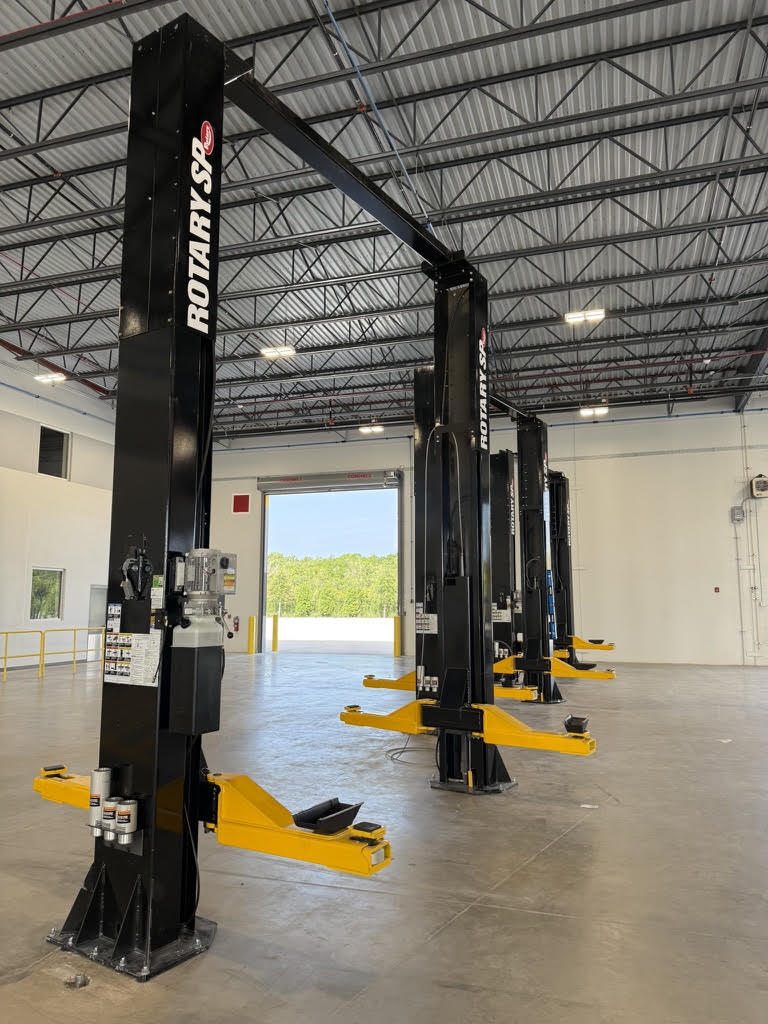
Look Beyond Fresh Paint and Cosmetic Appearance
A used automotive lift may look clean and well maintained while still having structural or mechanical concerns that require professional evaluation.
Fresh paint, cleaned hydraulic components, or recently replaced contact pads do not establish the condition of the complete lifting system.
Potential warning signs that deserve further evaluation include:
- Visible cracks or deformation in structural components
- Significant corrosion or deterioration
- Damaged column bases or mounting areas
- Bent lifting arms or damaged runways
- Unexplained welding or structural modifications
- Missing or damaged load-bearing components
A visual review by a prospective buyer is not a substitute for a qualified equipment inspection. Structural concerns should be evaluated before the equipment is purchased or placed into service.
Evaluate the Hydraulic System Before Buying a Used Lift
Many automotive lifts rely on hydraulic components to raise and lower vehicles. The condition of these components can influence equipment reliability, repair requirements, and future operating costs.
Hydraulic Cylinders
Visible leakage, damaged cylinder components, corrosion, or other deterioration may indicate that further evaluation or service is necessary.
Hydraulic Hoses and Fittings
Hoses and connections should be evaluated for deterioration, abrasion, leakage, damage, and compatibility with the equipment.
Hydraulic Power Unit
Unusual noise, inconsistent operation, visible leakage, or previous repairs may warrant additional evaluation of the power unit.
Operating Performance
Unexpected movement, uneven lifting, or abnormal lowering behavior should be investigated by a qualified professional rather than dismissed as normal characteristics of older equipment.
A Lift That Raises a Vehicle Is Not Necessarily Safe to Use
A seller may demonstrate that an automotive lift can move upward and downward. That demonstration alone does not establish the condition or proper operation of its safety systems.
Mechanical Locking Systems
Mechanical locks and related components should operate as intended for the equipment design. Missing, damaged, modified, or malfunctioning locking components require professional attention.
Arm Restraints
On applicable two-post lifts, arm restraint mechanisms and associated components should be evaluated for proper condition and operation.
Equalization and Synchronization Components
Depending on the lift design, cables, chains, hydraulic systems, or other components may help maintain appropriate lifting synchronization. These systems should be evaluated according to the manufacturer's requirements.
Vehicle Restraints and Runway Components
Four-post lifts should have the appropriate vehicle restraint and runway safety components specified for the equipment configuration.
What Maintenance and Inspection Records Can Tell You
Documentation can help a prospective buyer understand how a lift was maintained, whether problems were previously identified, and what repairs or component replacements have occurred.
Maintenance Records
Review available records of routine maintenance, lubrication, adjustments, component replacement, and other service activities appropriate to the equipment.
Inspection Reports
Previous inspection reports may identify equipment concerns, recommended corrective actions, and the condition of the lift at the time of inspection.
Repair Documentation
Records of hydraulic repairs, structural concerns, replacement components, and safety system repairs can provide useful information about the equipment's service history.
Consider a Qualified Automotive Lift Inspection Before Purchase
A used automotive lift is a piece of load-bearing equipment that technicians may work beneath throughout the business day.
Whenever practical, arrange a qualified evaluation while the equipment remains installed at its existing location. This may provide an opportunity to assess aspects of the equipment that cannot be evaluated as easily after disassembly.
An existing inspection report can provide useful historical information, but it does not establish the lift's condition after removal, transportation, or installation at another facility.
Stickney Equipment LLC is listed in the Automotive Lift Institute inspector directory . Contact our team to discuss inspection and evaluation requirements for your equipment.
How Old Is Too Old When Buying a Used Automotive Lift?
There is no universal age at which every automotive lift becomes unsuitable for continued service. Equipment condition, manufacturer requirements, previous use, maintenance history, and replacement parts availability all influence the decision.
An older lift with documented maintenance and appropriate replacement parts support may present a different ownership proposition than a newer lift that has experienced heavy use, neglected maintenance, or significant damage.
Previous Operating Environment
Consider whether the lift was used in a high-volume repair facility, a fleet maintenance operation, a low-volume workshop, or another environment that may have influenced equipment wear.
Manufacturer Support
Older equipment may have limited access to replacement components, technical documentation, or manufacturer support. Verify these factors before assuming the equipment can be maintained economically.
Can the Used Automotive Lift Still Be Properly Serviced?
A used lift may become an expensive investment if essential replacement components are difficult to obtain or cannot be matched to the equipment.
Hydraulic Components
Determine whether appropriate cylinders, seals, hoses, fittings, and power unit components remain available for the model.
Mechanical Components
Verify availability of applicable cables, chains, pulleys, pins, bearings, and other mechanical replacement components.
Safety System Components
Mechanical locks, arm restraints, vehicle restraints, and associated components should be replaceable with appropriate parts when service is required.
Vehicle Contact Accessories
Confirm that suitable lifting pads, adapters, extensions, and other necessary accessories are available for the exact equipment model.
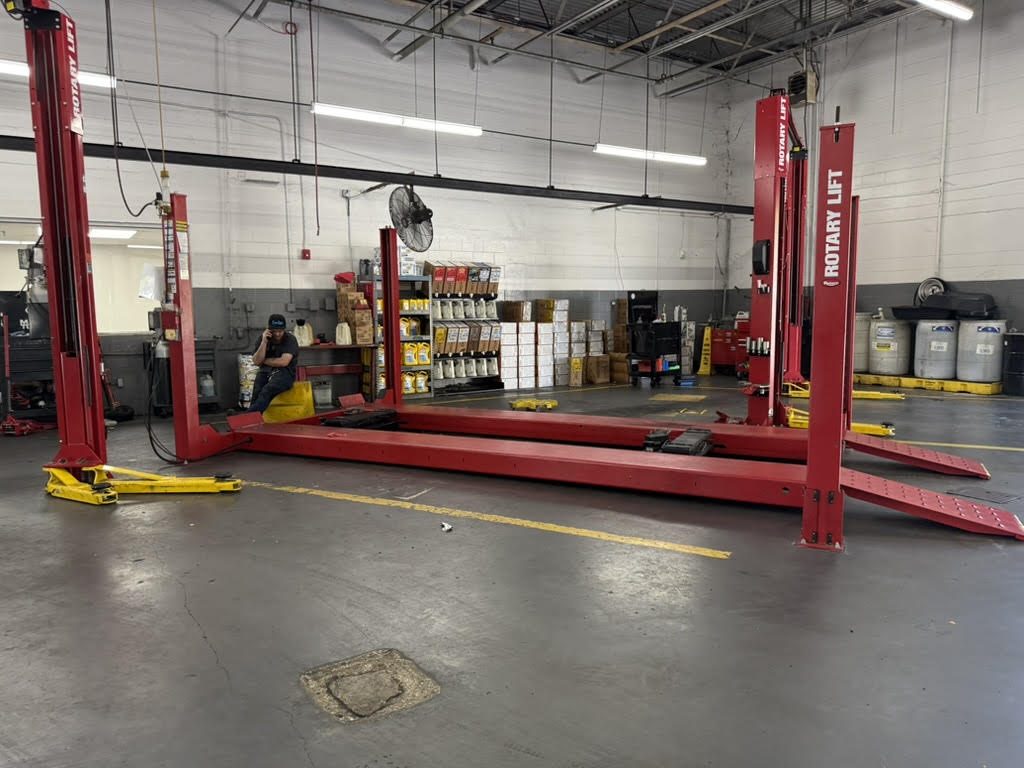
Buying a Used Two-Post Lift vs. a Used Four-Post Lift
Different automotive lift configurations have different components, vehicle-support methods, and equipment evaluation considerations.
Used Two-Post Automotive Lifts
Particular attention should be given to lifting arms, contact pads, arm restraints, column condition, carriage components, and applicable equalization systems.
Used Four-Post Automotive Lifts
Runways, crossmembers, lifting mechanisms, locking systems, vehicle restraints, and compatible bridge jacks may require evaluation depending on the equipment configuration.
Neither configuration should be selected solely because it is available at a discounted price. The equipment must support the services and vehicles your facility expects to handle.
Read our comparison of two-post and four-post automotive lifts to understand the operational differences before choosing secondhand equipment.
Make Sure the Used Lift Matches the Vehicles Your Shop Services
A lift previously used for passenger cars may not be appropriate for larger pickups, SUVs, commercial vans, or work trucks entering your service bays.
Rated capacity, weight distribution, arm reach, runway dimensions, wheelbase, lifting-point locations, and vehicle geometry all influence compatibility.
Some older lift configurations may also have limitations when servicing vehicles with different underbody layouts, battery enclosures, running boards, or specialized frame configurations.
Evaluate the equipment against your actual vehicle mix rather than assuming it can handle every vehicle below its advertised rated capacity.
Removing and Transporting a Used Automotive Lift Requires Planning
Purchasing secondhand equipment often involves moving a lift from one facility to another. The relocation process introduces additional considerations that may not be included in the advertised purchase price.
Equipment Disassembly
Removal should be performed appropriately for the equipment design, accounting for heavy components, stored energy, electrical connections, and hydraulic systems.
Component Identification
Verify that the required structural, mechanical, electrical, hydraulic, and safety components are accounted for during the relocation process.
Transportation and Handling
Appropriate handling and transportation are important to avoid introducing damage to columns, runways, cylinders, cables, and other equipment components.
Replacement Installation Hardware
Installation hardware should meet the manufacturer's requirements. Do not assume previously installed anchors or other hardware can automatically be reused.
A Used Lift Must Meet the Installation Requirements of Its New Location
A lift that was properly installed in its previous facility may require different preparation before it can be installed at another location.
Concrete condition, foundation specifications, anchoring requirements, overhead clearance, service bay dimensions, electrical supply, and surrounding workspace must be evaluated against the manufacturer's requirements.
Missing installation documentation can complicate the process, particularly when the equipment's exact model or original configuration is uncertain.
Discuss installation requirements before purchasing the equipment rather than discovering facility compatibility problems after the lift has been delivered.
What About ALI Certification When Purchasing a Used Automotive Lift?
Automotive Lift Institute product certification relates to specific lift models and their compliance with applicable certification requirements.
When evaluating used equipment, identify the exact model and review available certification information rather than assuming that every lift produced by a particular manufacturer has the same certification status.
Missing identification labels, undocumented modifications, incompatible replacement components, and changes to the original equipment configuration deserve further evaluation.
Product certification does not establish the current mechanical condition of an individual used lift or confirm that it has been properly installed and maintained.
Calculate the Real Cost of Buying a Used Automotive Lift
Compare the complete cost of acquiring, installing, inspecting, and maintaining the used equipment rather than comparing its purchase price directly with the price of a new lift.
Purchase Price
Establish exactly what is included in the sale, including accessories, power units, documentation, and associated components.
Removal and Transportation
Include appropriate disassembly, loading, transportation, unloading, and equipment handling expenses.
Repairs and Replacement Parts
Account for identified mechanical, hydraulic, electrical, or safety system repairs and required replacement components.
Facility Preparation
Include any necessary foundation work, electrical preparation, service bay changes, or other installation-related expenses.
Installation and Inspection
Budget for appropriate installation, commissioning, and qualified inspection before the equipment enters normal service.
Future Operating Costs
Consider expected maintenance, parts availability, potential repairs, and service bay downtime throughout the anticipated ownership period.
When Does Buying a New Automotive Lift Make More Sense?
Secondhand equipment may offer a reasonable investment when its condition, compatibility, documentation, and total installed cost are favorable. In other situations, new equipment may provide a more practical long-term solution.
Uncertain Equipment History
Missing identification information, incomplete maintenance records, undocumented repairs, and uncertain previous use can make the condition of secondhand equipment more difficult to evaluate.
Limited Parts Support
When essential replacement components are unavailable or difficult to identify, the potential long-term cost of ownership may outweigh the initial purchase savings.
Changing Service Requirements
A new lift selected around the shop's current vehicle mix and future service requirements may offer a better operational fit than equipment purchased primarily because of its discounted price.
What to Ask Before Agreeing to Purchase a Used Automotive Lift
A seller's answers can help determine whether the equipment deserves further consideration and whether enough information is available to arrange a meaningful professional evaluation.
- What is the exact manufacturer, model, and serial number?
- Why is the equipment being sold?
- How was the lift used in the previous facility?
- Are maintenance and inspection records available?
- Has the lift experienced structural or mechanical damage?
- Have any major components been repaired or replaced?
- Are all original required safety components present?
- Are the installation and operating manuals available?
- Which accessories are included in the purchase?
- Can the equipment be evaluated before removal?
Request clear photographs of equipment identification information and major components when evaluating a lift remotely. Photographs can assist preliminary screening but cannot replace a qualified inspection.
Plan for Maintenance and Repairs Before the Used Lift Enters Service
Purchasing a used automotive lift should include a plan for addressing existing equipment concerns and maintaining the lift throughout its remaining service life.
Required corrective work should be completed before the equipment is placed into normal operation. Maintenance activities should follow the manufacturer's instructions and the needs of the specific equipment configuration.
Establish appropriate maintenance and inspection records after installation so future equipment condition, service activities, and identified concerns can be documented.
Stickney Equipment provides automotive lift maintenance, repair, inspections, and related equipment services for qualifying facilities throughout Central Florida.
Six Things to Verify Before Finalizing Your Used Lift Purchase
Equipment Identity
Confirm the manufacturer, model, serial number, rated capacity, and availability of applicable equipment documentation.
Equipment Condition
Arrange an appropriate evaluation of structural, mechanical, hydraulic, electrical, and safety-related components.
Vehicle Compatibility
Verify that the equipment is appropriate for the vehicles, loading conditions, and repair applications expected in your service bays.
Installation Compatibility
Confirm that the proposed installation location can satisfy the equipment's foundation, clearance, anchoring, and utility requirements.
Replacement Parts Support
Determine whether compatible service parts, safety components, and required vehicle contact accessories remain available.
Complete Financial Investment
Compare the purchase, relocation, repair, installation, inspection, and anticipated maintenance costs against suitable new equipment alternatives.
Automotive Lift Inspection, Repair, and Installation in Central Florida
Stickney Equipment is based in Dover, Florida, and provides automotive lift equipment, installation, inspections, repair, maintenance, parts, accessories, and related services for qualifying facilities throughout Greater Lakeland, Tampa Bay, and surrounding Central Florida communities.
Whether you are evaluating secondhand lifting equipment, replacing an existing automotive lift, or expanding your repair facility, contact Stickney Equipment to discuss your equipment and service requirements.
Buying a Used Automotive Lift FAQs
Is buying a used automotive lift a good investment?
A used automotive lift can be a reasonable investment when its condition, vehicle compatibility, installation requirements, parts availability, and complete ownership costs are favorable. The purchase price alone should not determine whether the equipment is a good investment.
Should a used automotive lift be inspected before purchase?
A qualified evaluation before purchase is advisable whenever practical. It can help identify structural, mechanical, hydraulic, and safety-related concerns that may not be apparent from photographs or a seller's description.
How old is too old for a used automotive lift?
There is no universal age limit applicable to every automotive lift. Equipment condition, previous use, maintenance history, manufacturer requirements, replacement parts availability, and qualified evaluation should influence the decision.
Can a used automotive lift be moved to another repair shop?
A used lift may be relocated when its condition and manufacturer requirements permit it. Appropriate removal, transportation, installation, and inspection are important, and the new facility must satisfy the equipment's installation requirements.
Can I reuse the original anchor bolts from a used automotive lift?
Previously installed anchors should not automatically be reused. Installation hardware must meet the lift manufacturer's requirements and applicable anchoring specifications for the new installation location.
Does an existing inspection report mean a used lift is ready to install?
No. An existing inspection report provides information about the equipment at the time of inspection. Removal, transportation, reinstallation, equipment changes, and subsequent damage can affect its condition and suitability for service.
Is a used automotive lift cheaper than buying a new lift?
The initial purchase price may be lower, but removal, transportation, repairs, replacement parts, facility preparation, installation, inspection, and future maintenance can reduce or eliminate the expected savings.
Does ALI certification guarantee that a used automotive lift is safe?
No. Product certification relates to the applicable lift model and certification requirements. It does not establish the current condition, installation quality, maintenance history, or safe operation of an individual used lift.
What if replacement parts are no longer available for a used lift?
Limited parts availability can make continued maintenance and repair more difficult. If appropriate replacement components cannot be obtained, particularly for load-bearing or safety-related systems, replacing the equipment may be the more practical option.
Does Stickney Equipment provide automotive lift inspections and repair in Central Florida?
Stickney Equipment provides automotive lift inspections, repair, maintenance, installation, parts, accessories, and related services for qualifying facilities throughout Greater Lakeland, Tampa Bay, and surrounding Central Florida communities.
Make an Informed Decision Before Investing in a Used Automotive Lift
Contact Stickney Equipment to discuss automotive lift equipment, inspection, installation, maintenance, repair, replacement parts, accessories, and vehicle compatibility requirements for your Central Florida facility.