

Two-Post vs. Four-Post Automotive Lifts: Key Differences for Repair Shops
Choosing between a two-post and four-post automotive lift involves more than comparing lifting capacity. Vehicle support, technician accessibility, service bay dimensions, vehicle compatibility, and daily repair operations all influence which configuration makes the most sense for your facility.
What Is the Difference Between a Two-Post and Four-Post Automotive Lift?
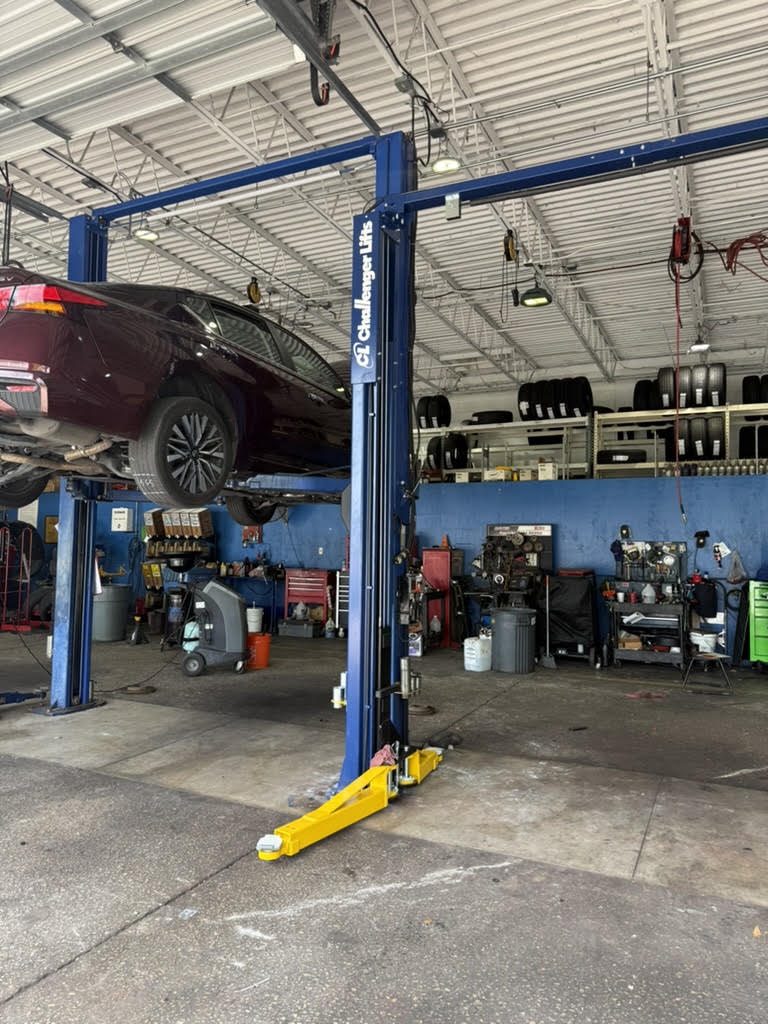
A two-post automotive lift typically supports a vehicle using adjustable lifting arms positioned at designated lifting points, allowing the wheels to hang freely. A conventional four-post lift supports the vehicle on elevated drive-on runways, keeping its wheels supported.
Two-post lifts are generally better suited to mechanical, brake, suspension, and drivetrain repairs that require wheel-free access. Four-post lifts are particularly useful for vehicle inspections, wheel-supported maintenance, and alignment services when appropriately equipped.
The better choice depends on the vehicles your shop services, the work technicians perform, and the physical requirements of your facility.
- ✅ Two-post lifts provide wheel-free vehicle access
- ✅ Four-post lifts support vehicles on drive-on runways
- ✅ Both configurations have model-specific capacity limits
- ✅ Vehicle compatibility involves more than total weight
- ✅ Installation requirements vary by manufacturer and model
- ✅ Service bay workflow should influence equipment selection
Three Fundamental Differences Between Two-Post and Four-Post Lifts
Although both configurations raise vehicles to a workable height, their methods of vehicle support create different advantages and limitations inside a professional repair shop.
Vehicle Support
Two-post lifts typically support vehicles at designated lifting points using adjustable arms. Conventional four-post lifts support vehicles through their wheels on elevated runways.
Technician Accessibility
Two-post configurations provide wheel-free access. Four-post configurations provide access beneath wheel-supported vehicles, with additional compatible lifting equipment needed for certain repairs.
Service Bay Requirements
Column placement, runway dimensions, arm movement, vehicle approach clearance, and surrounding workspace influence how each configuration fits into a facility.
When Is a Two-Post Automotive Lift the Better Choice?
Two-post lifts are widely used in general automotive repair facilities because their lifting-arm configuration allows technicians to access wheels, suspension components, and many underbody systems without supporting the vehicle on runways.
Brake Repairs
Wheel-free access allows technicians to remove wheels and service brake assemblies, rotors, calipers, and related components.
Suspension and Steering
The open configuration provides access to many suspension and steering components during appropriate repair procedures.
Drivetrain and Mechanical Repairs
Two-post lifts can provide useful working access around transmissions, exhaust systems, drivetrain assemblies, and other underbody components.
General Automotive Service
Adjustable lifting arms can accommodate a variety of compatible passenger vehicles, SUVs, and trucks, making two-post lifts practical for many general repair operations.
Two-Post Lifts Require Correct Vehicle Positioning
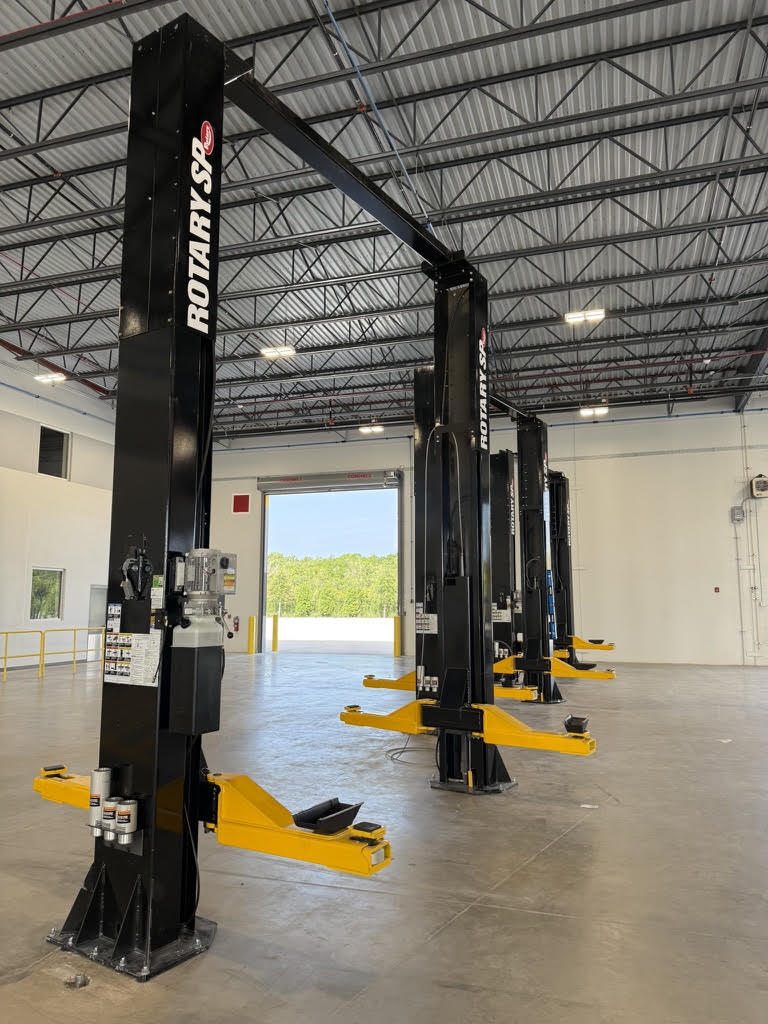
The flexibility of a two-post lift depends on the relationship between the vehicle, lifting arms, contact components, and designated lifting points.
A vehicle may fall within the lift's rated capacity while still presenting compatibility concerns because of its dimensions, weight distribution, or lifting-point locations.
- Verify vehicle-specific lifting points
- Evaluate lifting arm reach and configuration
- Confirm applicable weight distribution limits
- Use appropriate lift pads and adapters
- Account for vehicle dimensions and ground clearance
- Follow manufacturer operating requirements
When Is a Four-Post Automotive Lift the Better Choice?
Conventional four-post automotive lifts use drive-on runways to support vehicles by their wheels. This configuration can be particularly useful for facilities performing services that benefit from wheel-supported vehicle positioning.
Vehicle Inspections
Elevated runways provide access beneath compatible vehicles for many visual inspections and vehicle condition assessments.
Wheel Alignment
Four-post lifts specifically designed and equipped for alignment work can support professional wheel alignment operations.
Preventive Maintenance
Many fluid services, exhaust inspections, and routine underbody maintenance procedures can be performed with compatible four-post equipment.
Longer Vehicle Applications
Appropriately rated four-post models may accommodate longer-wheelbase vehicles, trucks, and commercial vans when runway dimensions and loading requirements are suitable.
Drive-On Runways Change How Technicians Access the Vehicle
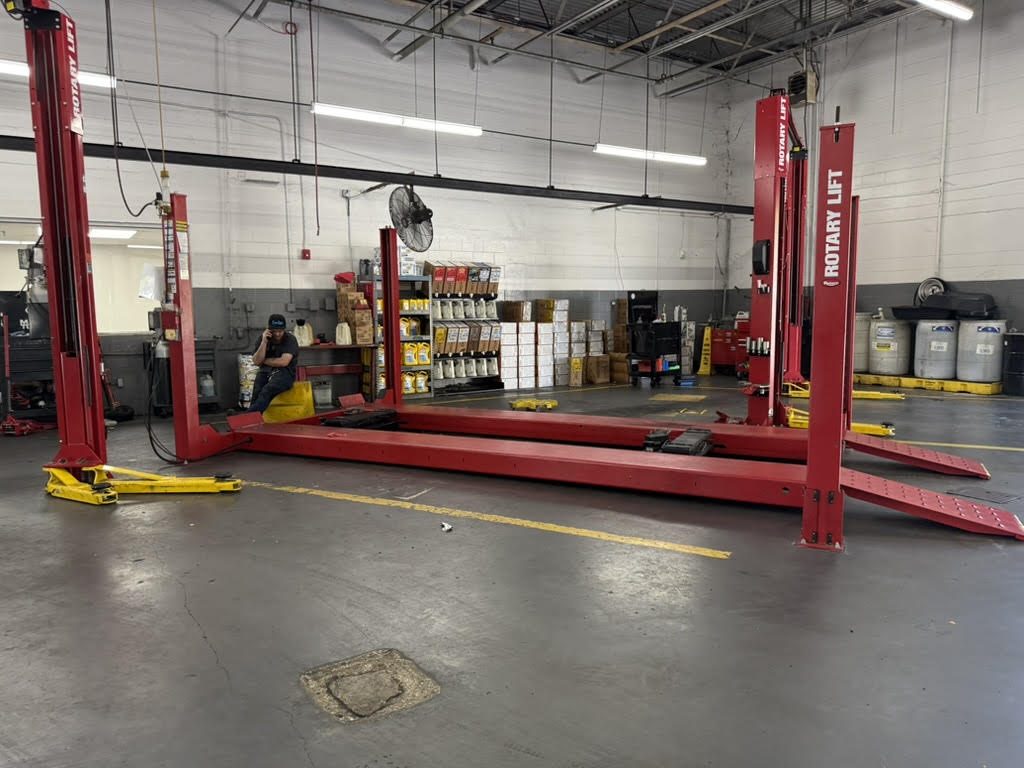
A conventional four-post lift keeps the vehicle's wheels supported on its runways. While this is useful for many services, it creates limitations when technicians need to remove wheels or unload suspension components.
Wheel-Free Repairs
Compatible rolling bridge jacks or other manufacturer- approved lifting equipment may be required to perform repairs that need the wheels raised off the runways.
Runway Dimensions
Runway length, width, spacing, and applicable loading limits must accommodate the vehicles the facility expects to service.
Alignment Equipment
Not every four-post lift is designed for wheel alignment. Alignment applications require equipment specifically designed or approved for that purpose.
How Lift Configuration Affects Everyday Repair Shop Operations
Equipment selection should reflect the work your technicians perform throughout a normal business day. A lift that matches the shop's primary services can reduce unnecessary vehicle movement and equipment changes.
Vehicle Positioning
Two-post lifts require correct arm and contact-point positioning. Four-post lifts use drive-on runways, which may simplify positioning for certain services.
Repair Accessibility
Wheel-free and wheel-supported configurations provide different working conditions. The appropriate choice depends on which components technicians need to access.
Equipment Utilization
Matching lift configurations to recurring repair orders can help a facility use its service bays more effectively instead of relying on one equipment type for every application.
Which Lift Configuration Is Better for Larger Vehicles?
Neither a two-post nor a four-post lift is automatically the better option for every pickup truck, SUV, commercial van, or fleet vehicle.
Actual vehicle weight, wheelbase, frame geometry, ground clearance, weight distribution, and installed equipment can all influence compatibility.
Work trucks equipped with service bodies, mounted equipment, or substantial cargo may have different loading characteristics than standard passenger vehicles.
Facilities that regularly service larger vehicles should evaluate appropriately rated equipment based on the actual vehicle mix and manufacturer requirements rather than choosing solely by the number of lift columns.
Why Rated Capacity Alone Should Not Determine Your Lift Choice
Rated lifting capacity is an essential consideration, but it does not describe every limitation associated with supporting a particular vehicle.
Two vehicles with similar total weights may have substantially different wheelbases, weight distributions, lifting-point locations, and physical dimensions.
Two-Post Compatibility
Evaluate lifting arm reach, contact-point geometry, appropriate adapters, vehicle positioning, and applicable individual arm loading requirements.
Four-Post Compatibility
Evaluate runway dimensions, wheelbase, vehicle width, axle loading, weight distribution, and applicable manufacturer restrictions.
Appropriate automotive lift parts and accessories may also influence which vehicle applications can be accommodated.
Comparing Two-Post and Four-Post Lift Installation Requirements
Both configurations require a suitable installation environment. The exact foundation, clearance, anchoring, and utility requirements depend on the selected lift model and facility conditions.
Concrete and Foundation
Concrete thickness, strength, condition, reinforcement, and anchoring requirements must be evaluated against the manufacturer's installation instructions.
Ceiling Height
Account for the lift structure, raised vehicle height, overhead doors, lighting, ventilation, and other potential obstructions.
Floor Space
Two-post lifts require adequate column spacing and lifting-arm clearance. Four-post lifts require suitable runway dimensions and surrounding working space.
Vehicle Approach
Four-post runways require suitable vehicle approach and exit clearance. Both configurations should allow vehicles to maneuver through the facility without unnecessary interference.
Electrical Requirements
Electrical supply, connections, and additional utility requirements should match the selected equipment and applicable installation requirements.
Technician Workspace
Leave appropriate working clearance for technicians, toolboxes, diagnostic equipment, parts movement, and other activities performed around the lift.
Which Lift Makes Better Use of Available Shop Space?
Two-post lifts generally have a smaller equipment footprint than conventional four-post configurations. However, equipment footprint alone does not describe the complete working space required for a service bay.
Vehicle doors, lifting-arm movement, technician access, runway approaches, and nearby equipment can all influence the practical layout.
- Measure the complete usable service bay
- Account for the largest compatible vehicles
- Consider vehicle entry and exit paths
- Allow appropriate technician working clearance
- Identify overhead and floor-level obstructions
- Consider future equipment expansion
Shop owners evaluating different above-ground automotive lift configurations should consider the complete facility layout before committing to a particular model.
Is a Two-Post or Four-Post Automotive Lift Safer?
Neither configuration is inherently safer for every vehicle or repair application. Safe operation depends on equipment compatibility, proper installation, operator training, equipment condition, and adherence to manufacturer requirements.
Correct Equipment Selection
The lift should be appropriate for the vehicle's weight, dimensions, loading characteristics, and intended service application.
Proper Operation
Technicians should understand the operating procedures, positioning requirements, safety systems, and limitations of the specific lift.
Equipment Condition
Worn components, damaged accessories, malfunctioning safety systems, or other equipment concerns should be addressed before the lift returns to normal service.
Evaluate Your Facility Before Purchasing an Automotive Lift
Choosing a lift before confirming installation requirements can create unnecessary delays, additional expenses, and equipment compatibility problems.
Start by identifying the vehicles your facility services, the available service bay dimensions, and the types of repairs technicians perform.
Then evaluate the proposed lift model against the manufacturer's foundation, clearance, utility, and vehicle compatibility requirements.
Stickney Equipment provides automotive lift equipment and installation services for qualifying facilities throughout Greater Lakeland, Tampa Bay, and surrounding Central Florida communities.
Compare More Than the Initial Purchase Price
The purchase price of an automotive lift is only one part of the overall equipment investment. Installation requirements, accessories, service capabilities, and long-term maintenance can all influence the cost of ownership.
Installation Costs
Facility preparation, foundation requirements, equipment placement, and utility connections can influence the total installation expense.
Required Accessories
Vehicle-specific adapters, rolling bridge jacks, alignment equipment, and other compatible accessories may affect the overall investment.
Revenue-Producing Services
Consider whether the lift supports the repair and maintenance services that represent a significant portion of your facility's workload.
Long-Term Equipment Care
Maintenance, inspections, replacement components, and future repair requirements should be considered when evaluating equipment ownership.
Should Your Repair Shop Have Both Two-Post and Four-Post Lifts?
A repair facility offering a broad range of automotive services may benefit from using both configurations rather than relying on one lift type for every repair order.
Two-post lifts can support general mechanical, brake, suspension, and other wheel-free repair applications.
A properly configured four-post lift can support vehicle inspections, alignment services, and maintenance procedures that benefit from wheel-supported access.
Assigning equipment around recurring service requirements can help reduce scheduling conflicts and improve the practical use of available service bays.
Both Lift Configurations Require Ongoing Equipment Care
Two-post and four-post automotive lifts contain load-bearing components, moving assemblies, lifting mechanisms, and safety systems that require appropriate attention throughout their service life.
Two-post lift maintenance may include attention to lifting arms, contact pads, restraints, moving joints, and other model-specific components.
Four-post lift maintenance may include attention to runways, lifting mechanisms, locking systems, vehicle restraints, and compatible accessories.
Follow the manufacturer's maintenance instructions and applicable inspection requirements. ANSI/ALI ALOIM calls for automotive lifts to be inspected at least annually by a qualified lift inspector.
Stickney Equipment LLC is listed in the Automotive Lift Institute inspector directory .
Six Things to Verify Before Choosing a Two-Post or Four-Post Lift
Primary Repair Services
Identify whether your technicians primarily perform mechanical repairs, brake services, inspections, alignment, or other specialized work.
Vehicle Compatibility
Evaluate the weight, dimensions, wheelbase, lifting points, and loading characteristics of the vehicles your shop regularly services.
Service Bay Dimensions
Confirm that the proposed lift and compatible vehicles can fit within the available working area while maintaining appropriate clearance.
Installation Requirements
Verify concrete, anchoring, ceiling height, electrical supply, and other model-specific installation requirements before purchasing.
Required Accessories
Determine whether compatible adapters, extensions, bridge jacks, or specialized equipment will be necessary for the intended applications.
Long-Term Business Needs
Consider future service expansion, equipment maintenance, inspection requirements, vehicle changes, and expected service bay utilization.
Two-Post and Four-Post Automotive Lift Solutions in Central Florida
Stickney Equipment is based in Dover, Florida, and provides automotive lift equipment, installation, repair, maintenance, inspections, parts, accessories, and related services for qualifying facilities throughout Greater Lakeland, Tampa Bay, and surrounding Central Florida communities.
Whether you are opening a new automotive repair shop, replacing existing equipment, or expanding your service capabilities, contact Stickney Equipment to discuss the lift configuration appropriate for your facility.
Two-Post vs. Four-Post Automotive Lift FAQs
Is a two-post or four-post lift better for an automotive repair shop?
Two-post lifts are generally better suited to mechanical repairs requiring wheel-free access. Four-post lifts are particularly useful for inspections, wheel-supported maintenance, and alignment when properly equipped. The better choice depends on the shop's primary services and vehicle compatibility requirements.
Are four-post automotive lifts safer than two-post lifts?
Neither configuration is inherently safer for every application. Safe operation depends on correct equipment selection, proper installation, vehicle compatibility, operator training, maintenance, inspections, and adherence to manufacturer requirements.
Can you perform brake repairs on a four-post lift?
Yes, when the lift is equipped with a compatible, manufacturer-approved lifting system that allows the wheels to be raised off the runways. Conventional four-post runways alone do not provide wheel-free access.
Which automotive lift is better for pickup trucks?
Both two-post and four-post lifts can accommodate compatible pickup trucks. The correct choice depends on actual vehicle weight, weight distribution, wheelbase, lifting points, equipment specifications, and the intended repair application.
Does a four-post lift require more floor space?
Conventional four-post lifts generally have a larger equipment footprint because of their runways and four columns. Exact working space requirements depend on the individual model, vehicle dimensions, approach clearance, and service bay layout.
Can any four-post automotive lift be used for wheel alignments?
No. Wheel alignment applications require a lift and associated equipment designed or approved for that purpose. A conventional four-post service lift should not automatically be considered alignment-ready.
Do two-post and four-post lifts have different concrete requirements?
They can. Concrete thickness, strength, condition, anchoring, and foundation requirements vary by manufacturer and model. The exact installation instructions should be verified before purchasing equipment or preparing the facility.
Should a repair shop have both types of automotive lifts?
Facilities performing a broad range of automotive services may benefit from both configurations. Two-post lifts can support wheel-free mechanical repairs, while appropriately equipped four-post lifts can support inspections, alignment, and wheel-supported maintenance.
Can Stickney Equipment help me choose an automotive lift in Central Florida?
Stickney Equipment provides automotive lift equipment and related services for qualifying facilities throughout Greater Lakeland, Tampa Bay, and surrounding Central Florida communities. Contact the team to discuss vehicle compatibility, equipment selection, and installation requirements.
Choose the Right Automotive Lift for Your Repair Shop
Contact Stickney Equipment to discuss two-post and four-post automotive lifts, heavy-duty lifting equipment, vehicle compatibility, installation, maintenance, repair, or inspection requirements for your Central Florida facility.